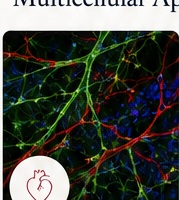
Cardiomyopathy & Heart Failure
Defining multicellular mechanisms of inherited and acquired cardiomyopathy and identifying pathways that drive myocardial dysfunction, remodeling, and heart failure.
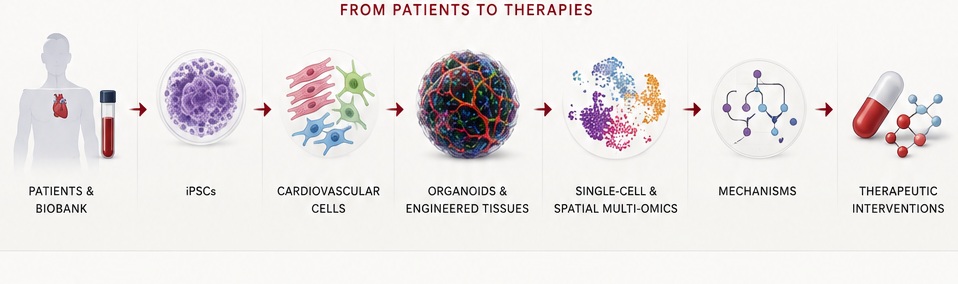
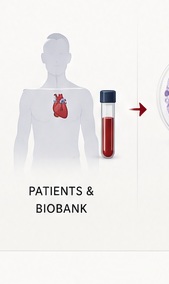
Learn More →We integrate patient-derived biospecimens, human iPSCs, multicellular cardiovascular models, genome engineering, and single-cell and spatial multi-omics to uncover mechanisms of cardiovascular disease.


Defining multicellular mechanisms of inherited and acquired cardiomyopathy and identifying pathways that drive myocardial dysfunction, remodeling, and heart failure.
Learn More →
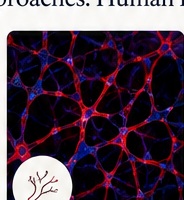
Investigating endothelial function, vascular remodeling, endothelial plasticity, and regenerative mechanisms in health and disease.
Learn More →
Uncovering mechanisms of cancer therapy-associated cardiotoxicity and developing precision cardioprotective strategies using patient-specific human models.
Learn More →
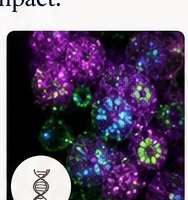
Using genome engineering, CRISPR-based functional genomics, and multi-omics to identify causal variants and regulatory pathways that drive cardiovascular disease.
Learn More →
Studying how environmental exposures and gene-environment interactions influence vascular and cardiac dysfunction using human experimental models.
Learn More →
Resolving disease-associated cell states, regulatory programs, and spatially organized pathways at cellular resolution.
Learn More →
We investigate how aging alters inflammatory signaling, endothelial function, vascular integrity, cellular state, and cardiac performance. Our work integrates human data, computational approaches, and iPSC-based cardiovascular models to define mechanisms of cardiovascular aging.
We are particularly interested in how aging intersects with genetic susceptibility, environmental stressors, and chronic inflammation to influence cardiovascular resilience and disease progression.
Learn More →Our research is grounded in patient samples and clinical phenotypes, combined with advanced human models to ensure biological relevance and translational impact.